
Follow one pallet and the risks show up in order
Most warehouse safety reviews start with a list of hazards. A more useful exercise is to pick a single pallet and walk with it. It arrives on a lorry, crosses a gap onto the dock, rides a forklift to a staging lane, and maybe finishes its trip on a driverless cart heading for the racks. Every place where it changes hands is a place where people, machines and assumptions meet.
For many Malaysian distribution centres in Shah Alam, Port Klang or Johor, those handover points have grown busier faster than the floor layout has changed. Below is a walk through each stop, plus the questions a site manager should raise at every one.
Stop one: the gap between lorry and building
Trailer beds rarely sit at the same height as the dock. A loaded lorry squats lower than an empty one, and different fleets arrive with different bed heights through the day. The UK Health and Safety Executive’s guidance on loading areas and bay design notes that ramps bridging this difference should never be extended to a steep slope, and that the hinged lip on many units can trap things as it folds or unfolds.
There is a second, quieter problem. Each time a loaded truck drives in and out of a trailer, it jolts the vehicle slightly forward. Over a long unload the trailer can creep away from the bay, widening the gap until the ramp slips. Wheel chocks, trailer restraints and a clear signal for drivers that it is safe to leave all address this. When comparing levelling equipment for the loading bay, ask about lip length, working range for your actual fleet, and whether the controls can be interlocked with the door or a restraint.
About a minute on forklift safety when loading trucks and trailers, from a US workers’ compensation insurer.
Stop two: the staging lane, where people and forks overlap
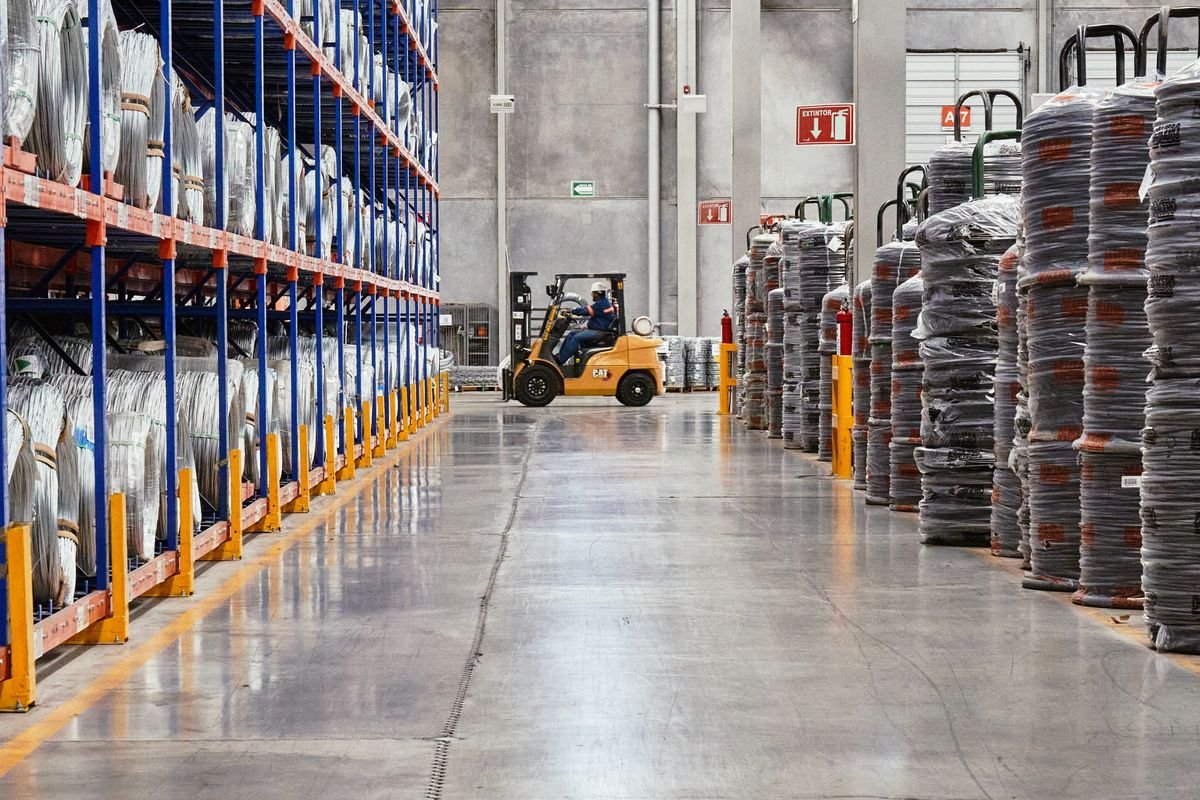
Once the pallet is inside, it usually sits in a staging area while someone checks the count. This is where pickers, checkers and forklift drivers share the same few square metres. Blind corners at rack ends, reversing with a high load, and a supervisor stepping out with a clipboard are the classic ingredients for a struck-by incident.
OSHA’s overview of hazards in warehousing lists powered industrial trucks alongside robotics and material handling among the main risks in this fast-growing sector. Floor marking and pedestrian walkways help, but they rely on everyone remembering the rules at the end of a long shift. Proximity warning systems add a layer that does not depend on memory. Products such as SysGuard ProxiAlert use wearable tags to alert both driver and worker when they come too close. Whatever you trial, measure near misses before and after, not just how many units were installed.
Stop three: the repeat run to storage
The trip from staging to racking is often the same route dozens of times a shift. That repetition is exactly why automation appeals here. An AGV follows a defined path using magnetic tape, reflectors or natural feature navigation, slows when its scanners detect an obstacle, and stops if something enters its protective field. Reviewing guided vehicle options for repeat routes makes more sense once you have counted how many of your forklift journeys are truly identical.
The safety benefit is real but conditional. An AGV removes a tired human from a boring run; it does not remove the need for traffic rules. Decide early whether AGV lanes will be fully segregated, shared at fixed crossing points, or mixed. Mixed traffic needs the most training, because people learn quickly that the robot will stop for them and start cutting in front of it.
What to check before the next equipment budget
Malaysia’s Occupational Safety and Health Act 1994, as amended in 2022, expects employers to identify and control risks so far as is practicable, and DOSH inspectors will look at how traffic is managed, not just whether equipment exists. A practical review this quarter could be as simple as:
- Film one busy hour at the dock and count how often a trailer moves during unloading.
- Mark every point on the floor where a pedestrian route crosses a forklift route.
- List which forklift journeys repeat more than twenty times a shift.
- Ask drivers which corner they slow down for without being told.
That last answer is often the most honest map of risk in the building. Start there, then decide which handover point deserves the money first.